Contenido
- What Does Board Certification Mean?
- Why Experience Matters in Vein Care
- Common Conditions Vein Doctors Treat
- Questions to Ask Your Vein Doctor Before Vein Treatment
- Treatment Options That May Be Available
- Finding the Right Vein Doctor
- When to Schedule a Vein Screening
- Preguntas frecuentes
- Dé el siguiente paso hacia una mejor salud venosa
Choosing a vein doctor is an important step when you are dealing with leg swelling, varicose veins, aching, heaviness, skin changes, or symptoms that keep coming back. While visible veins may seem like a surface-level concern, they can sometimes be connected to underlying vein disease that affects circulation in the legs.
That is why experience, training, and thoughtful evaluation matter.
A board-certified physician with experience in vein care can help identify what may be causing your symptoms, determine whether venous reflux or chronic venous insufficiency may be involved, and recommend treatment options based on your individual needs.
If you are exploring vein care, here is what to know about board certification, why experience matters, and what to ask before treatment.
What Does Board Certification Mean?
Board certification is a credential that shows a physician has completed advanced training and met specific standards in a medical specialty. Depending on the provider’s background, board certification may be in areas such as surgery, vascular medicine, interventional radiology, family medicine, internal medicine, or another medical field.
While board certification does not always mean a physician is certified specifically in “vein medicine,” it can be an important sign of professional training, clinical knowledge, and commitment to standards of care.
When choosing a vein doctor, board certification is one factor to consider alongside:
- Experience treating vein disease
- Training in minimally invasive vein procedures
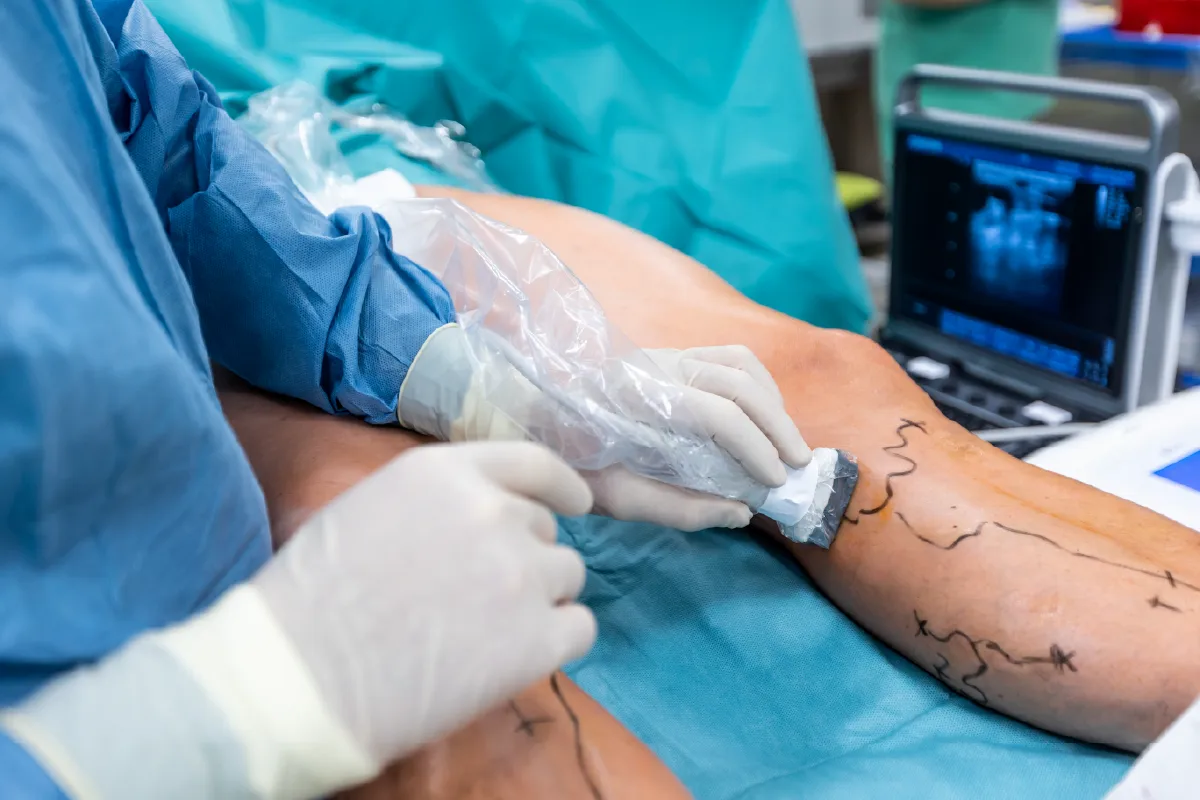
- Use of diagnostic ultrasound when appropriate
- Patient education and communication style
- Planificación personalizada del tratamiento
- Follow-up care and long-term vein health support
The goal is to choose a provider who understands both the visible signs of vein disease and the underlying circulation issues that may be causing symptoms.
Why Experience Matters in Vein Care
Vein symptoms can be more complex than they appear. A patient may come in for varicose veins, but the underlying issue may be venous reflux. Another patient may have leg swelling, heaviness, or cramping without obvious visible veins. In both cases, proper evaluation is important.
Experienced vein doctors understand how to look beyond the surface. They can assess symptoms, review medical history, perform a physical evaluation, and determine whether additional testing, such as diagnostic ultrasound, may be needed.
This matters because effective vein care is not only about treating visible veins. It is also about understanding why those veins developed and whether the deeper vein system is functioning properly.
The right provider should explain your symptoms and treatment options in a way that is clear, patient-friendly, and based on your individual findings.
Common Conditions Vein Doctors Treat
Vein doctors evaluate and treat conditions that affect the veins, especially in the legs. These conditions can cause visible vein changes, discomfort, swelling, and skin-related symptoms.
Common conditions vein doctors treat include:
Varices
Varicose veins are enlarged, twisted veins that often appear near the surface of the skin. They may look blue, purple, raised, or rope-like. Varicose veins can cause aching, heaviness, throbbing, swelling, itching, burning, and leg fatigue.
While some people think of varicose veins as only cosmetic, they may be a sign of underlying vein disease.
Arañas vasculares
Spider veins are small, visible veins that often appear as thin red, blue, or purple lines near the surface of the skin. While spider veins may be cosmetic for some people, they can also appear alongside symptoms such as aching, heaviness, or discomfort.
When spider veins occur with symptoms, a vein screening can help determine whether an underlying vein issue may be involved.
Insuficiencia venosa crónica
Chronic venous insufficiency, or CVI, is a vein condition that occurs when the valves in the leg veins do not work properly. This can cause blood to pool in the legs, leading to swelling, heaviness, aching, skin changes, and varicose veins.
CVI can progress over time, which is why persistent symptoms should be evaluated.
Venous Reflux
Venous reflux occurs when the valves in the leg veins do not close properly. This allows blood to flow backward and pool in the legs. Over time, venous reflux can contribute to leg swelling, heaviness, aching, varicose veins, and skin changes.
A diagnostic ultrasound may be recommended to evaluate blood flow and identify refluxing veins.
Leg Swelling and Heaviness
Leg swelling and heaviness can have several causes, but vein disease is one possible contributor. When blood is not moving efficiently out of the legs, pressure can build inside the veins and fluid may collect in the surrounding tissue.
Swelling that occurs with visible veins, aching, throbbing, or skin changes should be evaluated by a vein specialist.
Questions to Ask Your Vein Doctor Before Vein Treatment
Before beginning treatment, it is important to understand your diagnosis, your options, and what to expect. A trustworthy vein doctor should welcome your questions and explain recommendations clearly.
Helpful questions to ask include:
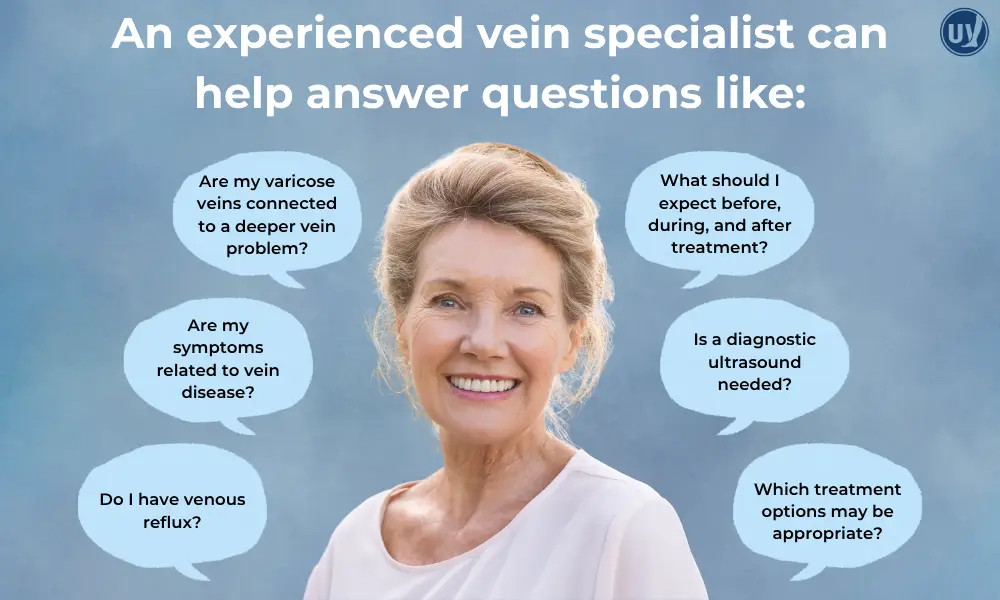
- What may be causing my symptoms?
- Do I need a diagnostic ultrasound?
- Do I have venous reflux or chronic venous insufficiency?
- Are my visible veins connected to a deeper vein issue?
- What treatment options may be appropriate for me?
- What are the goals of treatment?
- What should I expect during the procedure?
- Is there downtime after treatment?
- Will I need more than one treatment session?
- How will follow-up care work?
- What can I do to support long-term vein health?
- What insurance or referral requirements should I confirm?
Asking these questions can help you feel more informed and confident before moving forward.
Treatment Options That May Be Available
Treatment recommendations depend on your symptoms, ultrasound findings, vein anatomy, medical history, and overall health. Some patients may start with conservative measures, while others may be candidates for minimally invasive vein treatment.
Conservative Care
Conservative care may include walking regularly, elevating the legs, avoiding long periods of sitting or standing, staying hydrated, and wearing compression stockings if recommended.
These habits may help manage symptoms, but they do not repair damaged vein valves or close diseased veins.
Radiofrequency Ablation, or RFA
Radiofrequency ablation, or RFA, uses controlled heat delivered through a thin catheter to close a diseased vein. Once the treated vein closes, blood naturally reroutes through healthier veins, helping reduce symptoms caused by venous reflux.
VenaSeal
VenaSeal™ is a minimally invasive vein treatment that uses a medical adhesive to close a diseased vein. Once the vein is sealed, blood reroutes through healthier veins, helping address symptoms related to venous reflux.
Varithena
Varithena® is an injectable foam treatment used to close certain diseased veins. The foam is delivered into the targeted vein, where it helps the vein collapse and close so blood can reroute through healthier veins.
Escleroterapia guiada por ultrasonidos
Ultrasound-guided sclerotherapy combines ultrasound imaging with targeted injections to locate affected veins in real time and guide a medical solution, called a sclerosant, directly into the targeted vein. This causes the vein to collapse and close, allowing blood to reroute through healthier veins.
This treatment may be used for problematic veins beneath the surface of the skin, including deeper varicose veins that may not be visible to the naked eye.
Microflebectomía
Microphlebectomy is a minimally invasive procedure that removes certain varicose veins through tiny punctures in the skin. It is often used for visible, bulging veins near the surface of the skin.
Your provider can explain which treatment options may be appropriate after evaluating your symptoms and diagnostic findings.
Finding the Right Vein Doctor
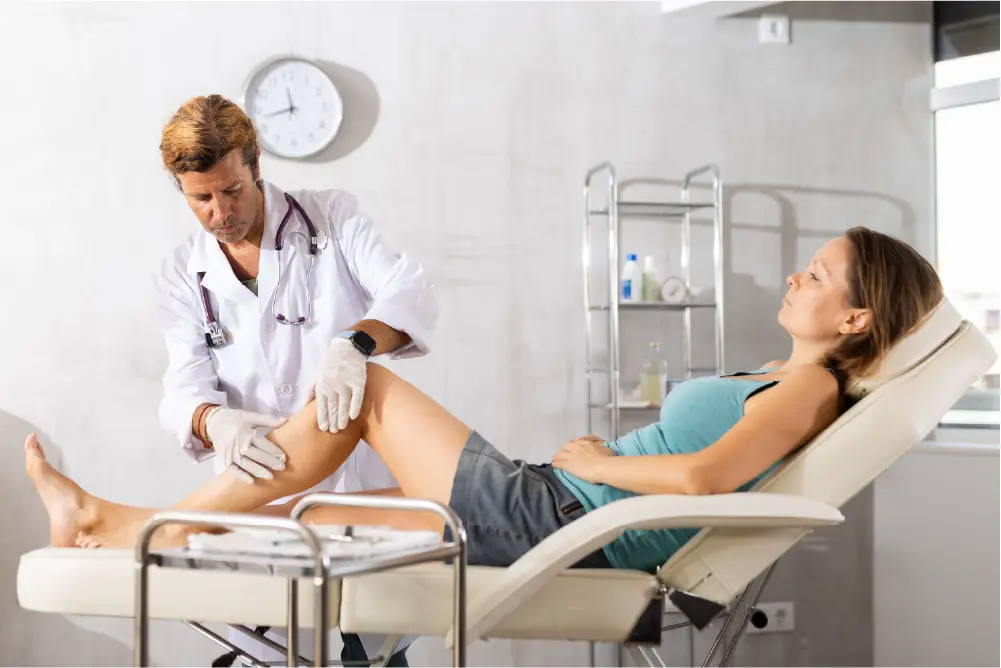
Finding the right vein specialist is about more than choosing the nearest clinic. It is about finding a provider who listens to your concerns, evaluates your symptoms carefully, and explains your options clearly.
When comparing vein doctors or clinics, look for:
- Board-certified physicians or experienced vein care providers
- Familiarity with venous reflux and chronic venous insufficiency
- Diagnostic ultrasound when medically appropriate
- Minimally invasive treatment options
- Clear explanations of procedures and recovery expectations
- Planificación personalizada del tratamiento
- Follow-up recommendations
- Patient-focused communication
You should feel comfortable asking questions and discussing your concerns. A good provider will help you understand not only what treatment may be recommended, but why it may be appropriate for your symptoms.
When to Schedule a Vein Screening
You do not need to wait until symptoms become severe to seek answers. Many people dismiss vein symptoms as normal fatigue, aging, or the result of standing or sitting too long. However, recurring symptoms may be a sign that your leg veins are not moving blood as efficiently as they should.
Consider scheduling a vein screening if you experience varicose veins, spider veins with discomfort, leg swelling, leg heaviness or fatigue, aching, throbbing, cramping, restless legs, itching or burning near visible veins, skin discoloration around the ankles or lower legs, symptoms that worsen after sitting or standing, symptoms that improve with walking or leg elevation, or slow-healing wounds near the lower legs, ankles, or feet.
A vein screening can help determine whether your symptoms may be related to venous reflux, chronic venous insufficiency, or another vein condition. If additional evaluation is needed, diagnostic ultrasound may be recommended.
Preguntas frecuentes
A board-certified vein doctor is typically a physician who is board-certified in a medical specialty and has experience evaluating and treating vein disease. Board certification reflects advanced training and professional standards, while vein care experience helps ensure the provider understands conditions such as varicose veins, venous reflux, and chronic venous insufficiency.
Board certification can be an important sign that a physician has completed advanced training and met standards within a medical specialty. When choosing a vein specialist, it is also important to consider the provider’s experience with vein disease, diagnostic ultrasound, minimally invasive treatment options, and patient-centered care.
Vein doctors treat conditions such as varicose veins, spider veins, venous reflux, chronic venous insufficiency, and leg swelling related to vein disease. They may also evaluate symptoms such as aching, heaviness, throbbing, cramping, restless legs, itching, burning, skin discoloration, and slow-healing wounds.
Yes. Many vein conditions can be treated with minimally invasive procedures such as radiofrequency ablation, VenaSeal™, Varithena®, ultrasound-guided sclerotherapy, and microphlebectomy. The right treatment depends on your symptoms, ultrasound findings, vein anatomy, and overall health.
You can schedule a vein screening by finding a UVVC clinic near you and contacting the team to request an appointment. A screening can help determine whether your symptoms may be related to vein disease and whether additional evaluation may be recommended.
Dé el siguiente paso hacia una mejor salud venosa
Choosing a board-certified vein doctor or experienced vein specialist can help you feel more confident in your care. Vein symptoms are not always just a cosmetic concern, and the right provider can help determine whether an underlying circulation issue may be contributing to your discomfort.
At United Vein & Vascular Centers, our specialists evaluate vein symptoms, explain diagnostic findings, and recommend treatment options based on each patient’s individual needs.
Find a UVVC clinic near you to meet with a vein specialist and learn what may be causing your symptoms.