Zawartość
- Why Travel Affects Leg Circulation
- What Are Compression Socks?
- How Compression Socks Help During Travel
- Types of Compression Socks for Travel
- How to Choose the Best Compression Socks for Holiday Travel
- How and When to Wear Compression Socks While Traveling
- When Compression Socks are Especially Important
- When to Talk to a Specialist About Compression
- Często zadawane pytania
- Find a Clinic Near You
Holiday travel often means long flights, road trips, and hours spent sitting while heading to see family and friends. But while the season brings excitement, it can also bring discomfort, especially in your legs. Swelling, heaviness, and poor circulation are common during long trips, and for many travelers, these symptoms can make traveling stressful or uncomfortable.
One of the simplest and most effective ways to protect your circulation while traveling is by wearing compression socks. Whether you’re flying across the country or driving several hours, the right compression socks can help keep your legs feeling lighter, supported, and energized.
By understanding how compression works and selecting the right type for your needs, you can travel more comfortably and protect your long-term vein health at the same time.
Why Travel Affects Leg Circulation
Any time you sit still for long periods, circulation in your legs naturally slows. Your calf muscles normally help pump blood upward toward your heart, but when they aren’t moving, blood and fluid can begin to pool in your lower legs.
This can lead to:
- Swelling in the feet and ankles
- Leg tightness or heaviness
- Visible vein swelling
- Increased risk of blood clots (especially on long flights)
Air travel adds another layer of challenge. Cabin pressure, low humidity, and dehydration can thicken the blood slightly, making it harder to circulate efficiently. For individuals with underlying conditions — such as varicose veins, venous insufficiency, or a history of swelling — these effects are often more noticeable.
Compression socks help counter these changes by supporting the veins mechanically and promoting steady blood flow.
What Are Compression Socks?
Compression socks are specialized garments designed to apply gentle, controlled pressure to the legs. This pressure is strongest at the ankle and gradually decreases up the calf, a design known as graduated compression.
This gradient encourages blood to move upward instead of pooling in the lower legs. By doing so, compression socks support healthy circulation and help prevent discomfort during long travel days.
Compression therapy is a foundation of vein and vascular care, and it’s commonly recommended for conditions like:
- Żylaki
- Przewlekła niewydolność żylna
- Leg swelling (edema)
- DVT prevention during travel
- Post-procedure recovery
To learn more about how compression therapy supports circulation, visit our Compression Therapy page.
How Compression Socks Help During Travel
Compression socks offer several benefits that make them ideal for holiday travel. Their gentle pressure helps improve blood flow and reduce venous pressure, making your legs feel more comfortable before, during, and after long trips.
They Prevent Swelling
By supporting upward blood flow, compression socks help prevent the fluid buildup that leads to swollen ankles and tightness during travel.
They Support Tired or Achy Legs
Long periods of sitting or restricted leg movement can lead to muscle fatigue. Compression helps counteract that feeling of heaviness or pressure in the lower legs.
They Lower the Risk of DVT During Long Flights
Deep vein thrombosis (DVT) can occur when blood clots form in the deep veins, often triggered by prolonged immobility. Compression socks are a widely recommended strategy for reducing travel-related clot risk, especially on flights over four hours.
They Improve Circulation Overall
Graduated pressure encourages consistent blood flow, helping your legs feel energized and supported, even when you can’t move as freely as usual.
Types of Compression Socks for Travel
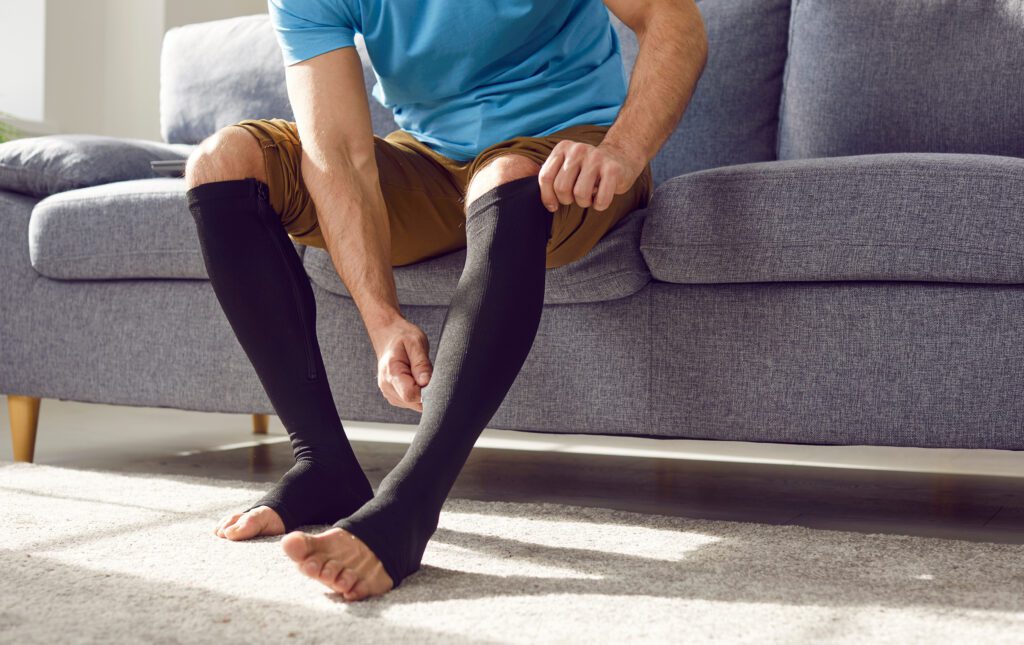
Compression socks come in different strengths, lengths, and styles. Selecting the right pair can make a big difference in comfort and effectiveness.
Graduated Compression Socks (Best for Travel)
These provide the strongest pressure at the ankle and gradually loosen as they move up the leg. They are the standard for flight and travel use.
Compression Strength Options
Common levels include:
- Mild (8–15 mmHg): Everyday support, good for light swelling
- Moderate (15–20 mmHg): Ideal for travel, standing for long periods, and minor circulation issues
- Firm (20–30 mmHg): Often recommended for varicose veins or venous insufficiency
- Medical-grade (30–40 mmHg): Used only under medical supervision
For most travelers, 15–20 mmHg or 20–30 mmHg provides the right level of support.
Sock Lengths
- Knee-high: Best for travel; supports the lower leg and calf
- Thigh-high: Sometimes used for post-surgical support
- Full compression tights: Helpful for those who prefer total-leg support
Material and Comfort Features
Szukaj:
- Moisture-wicking fabric (important during long travel days)
- Breathable, stretchy materials
- A comfortable top band that stays in place without digging in
How to Choose the Best Compression Socks for Holiday Travel
Not all compression products are created equal. When selecting the best pair for your trip, consider the following features.
1. Choose the Right Level of Compression
For most healthy travelers, moderate compression (15–20 mmHg) is enough. If you have circulation issues or swelling, your specialist may recommend 20–30 mmHg.
2. Get the Correct Size
Compression socks must fit properly to work. Too loose, and they won’t support circulation. Too tight, and they may cause discomfort. Measure your ankle and calf according to the brand’s size chart.
3. Look for High-Quality Fabric
Moisture-wicking, breathable materials help prevent irritation, especially on long flights.
4. Select Knee-High for Travel
Knee-high socks provide targeted support where swelling is most common.
5. Consider Your Travel Length
Longer flights or extended road trips may benefit from slightly firmer compression.
If you’re unsure which level or style is best, your vascular specialist can guide you based on your symptoms, health history, and travel plans.
How and When to Wear Compression Socks While Traveling
For best results, put on your compression socks before you start traveling, ideally first thing in the morning when swelling is minimal.

Consistent use during long travel days is one of the easiest ways to maintain healthy blood flow in the lower legs.
When Compression Socks are Especially Important
Compression is helpful for all travelers, but it’s especially beneficial for people who:
- Have varicose veins
- Experience swelling after sitting
- Have chronic venous insufficiency
- Are over age 50
- Are pregnant
- Have a personal or family history of DVT
- Sit for more than four hours at a time
- Recently underwent a vein procedure
If you fall into these categories, compression socks can be a valuable part of your travel routine.
When to Talk to a Specialist About Compression
While many people can use over-the-counter compression socks, certain travelers benefit from medical guidance. Consider scheduling a vein evaluation if you:
- Have persistent leg swelling
- Notice aching, heaviness, or tightness after flights
- Have visible varicose veins
- Experience numbness or tingling in your feet
- Have a history of DVT
- Frequently travel long distances
A vascular specialist can recommend the right type of compression and evaluate whether your symptoms are linked to a deeper circulation issue.
Często zadawane pytania
Most travelers do well with 15–20 mmHg compression. Those with vein disease or swelling may need 20–30 mmHg. Ask your specialist for guidance.
They can help reduce risk by improving venous blood flow. They are especially recommended for flights longer than four hours.
Yes. Put them on before your trip begins and keep them on until you reach your destination.
No. Only medical-grade compression socks provide graduated pressure that supports vein function.
Yes. They can reduce fluid buildup and ease discomfort even after travel.
Most people can wear them safely, but those with certain arterial conditions should speak with a specialist first.
Find a Clinic Near You
Whether you’re heading home for the holidays or traveling abroad, compression socks can help you stay comfortable, reduce swelling, and protect your circulation throughout the journey.
At United Vein & Vascular Centers, our specialists can recommend the right compression level, evaluate your circulation, and create a personalized plan to support your vein health year-round.
Find a clinic near you and schedule your consultation today.
Medically reviewed by UVVC National Medical Director, Dr. Domenic Zambuto